
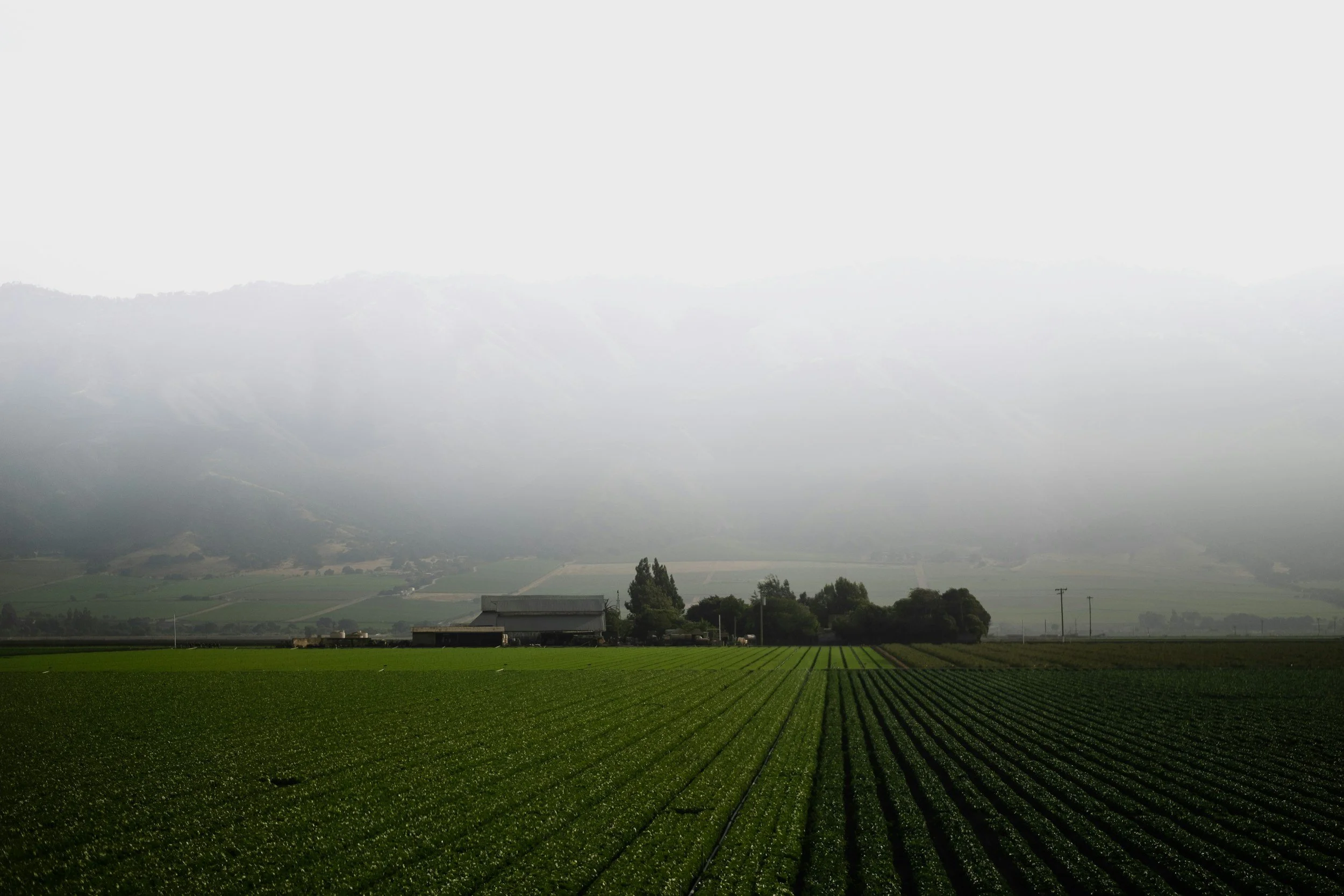
Rising Land Values & Water Challenges: Why Central Valley Families Are Choosing DSTs
Iron Ridge Advisors helps Central Valley California farmers and ranchers explore DSTs to defer taxes, access potential income, and protect family legacies.
California’s Central Valley – the nation’s agricultural heartland – is facing unprecedented challenges that are prompting many farming families to rethink their financial futures. Prolonged droughts and water scarcity, rising operational costs, and persistently low commodity prices have put intense pressure on farm incomes and land values. These issues are threatening the long-term viability of many family farmsturlockjournal.comsierradailynews.com. In response, a growing number of Central Valley farm owners are moving their wealth into Delaware Statutory Trusts (DSTs) as a strategic way to preserve capital and generate stable income. In this article, we explore why DSTs are emerging as a good fit for these families and how this transition can secure their legacy.
Water Scarcity and Regulatory Pressures
Water is the lifeblood of Central Valley agriculture, yet it has become increasingly scarce and regulated. Years of drought and over-pumping have led to strict groundwater regulations under the Sustainable Groundwater Management Act (SGMA) and limits on surface water allocations. Even in years with healthy reservoir levels, farmers often receive only a fraction of their contracted water supply (for example, just 55% of Central Valley Project water in 2025 for some regions. This uncertainty makes planning difficult and reduces crop yields, undermining farm revenues.
Moreover, farmland that lacks reliable water sources is plummeting in value. Since SGMA’s implementation, properties dependent solely on groundwater (so-called “white area” farmland) have lost a huge share of their worth – some orchards saw values drop by half in a single year once stricter pumping limits became clear. By contrast, land with dual water sources has held more value, highlighting just how critical water security is to farm equity. Hundreds of thousands of acres may ultimately be forced out of production as water is rationed; one study projected about 500,000 acres (10% of the valley’s farmland) could be fallowed under SGMA’s mandates (kvpr.org). For farming families, this represents not just an environmental crisis but a financial one – decades of wealth tied up in land are at risk as water becomes unreliable.
Economic Pressures: Rising Costs and Low Commodity Prices
Piles of old grapevines awaiting disposal in Lodi, California, as growers remove unprofitable vineyardsturlockjournal.com. This has become a common sight in parts of the Central Valley, reflecting the tough economics many farmers face. Commodity prices for key crops have fallen or remained weak, while the cost of farming has surged, squeezing profit margins (turlockjournal.com). For example, a glut of wine grapes led to an oversupply in recent years; Central Valley vineyards are hitting the market in growing numbers, but buyer interest is scant due to poor returns. The situation is similar for other crops like almonds – after several boom years, almond prices fell below break-even levels, with farmers earning around $1.77 per pound on average versus roughly $2.30 needed just to cover costs. These low prices have resulted in billions of dollars in losses and left many growers unable to maintain or replant their orchards.
At the same time, operational costs have climbed to record highs. Inflation has driven up prices for fuel, fertilizer, and equipment, while new regulations and labor laws increase compliance costs. Farmers are paying more for everything from water (where it’s available) to wages, due in part to California’s rising minimum wage and worker shortages. As one agriculture report noted, this combination of lower commodity prices and soaring production costs, compounded by regulatory burdens and trade disruptions, has created financial pressures “we have not seen in decades. The result is that many family farms are operating on razor-thin margins or at a loss.
Impacts on Land Values and Farm Viability
The twin challenges of water and economics are not only squeezing annual income – they’re also eroding the long-term wealth held in farmland. Land appraisers in California report that values for many agricultural properties declined from 2023 to 2024, especially for those without secure water rights. In regions of the San Joaquin Valley, groundwater-reliant orchards lost roughly 50% of their value in one year, a stark reflection of buyers’ pessimism about future water availability.Even land with good water saw value drops (e.g. irrigated almond orchards down ~25%) due to persistently low crop prices.This means some farming families’ primary asset – their land – is worth far less than it was just a short time ago.
Financial stress is mounting. Industry experts have observed more “For Sale” signs on farms and ranches as owners grapple with debt and diminishing returns. In many cases, properties are being listed but not selling easily, because prospective buyers are wary of the same water and market issues. Some farm owners have burned through savings or equity trying to weather these tough years, only to find lenders pressuring them to sell or even facing bankruptcy when losses continue. It’s a painful situation for multi-generational farm families. After investing their lives in agriculture, they are now confronted with the possibility that continuing to farm may simply not be economically sustainable. This reality is driving a search for alternatives to safeguard the family’s wealth and future.
Why Are Farming Families Turning to DSTs?
Confronted with these challenges, many Central Valley farming families are making a strategic pivot. Instead of pouring more money into struggling operations, they are choosing to diversify their assets and reduce exposure to farming risks. In practice, this often means selling all or part of their agricultural land – ideally while it still holds value – and reinvesting the proceeds elsewhere. By doing so, they hope to secure a more stable income stream and protect the wealth that their farmland represents.
Such decisions are not made lightly; farming isn’t just a business but a way of life. However, the prospect of another season of losing money due to low crop prices or of having fields lie idle for lack of water can make even tradition-bound families consider change. In some cases, older farmers nearing retirement see an opportunity to step away from the grind of farm management, while younger generations may be less inclined to carry on the farm if profitability looks grim. The goal for many is to convert illiquid, high-maintenance farm equity into a more liquid, income-producing investment that can support the family for years to come.
This is where Delaware Statutory Trusts (DSTs) enter the conversation. A DST offers a vehicle for farm owners to redeploy their capital into commercial real estate investments that generate passive income – without triggering immediate capital gains taxes on the sale of their land. It essentially provides a path to transition wealth from the fields to a diversified portfolio of properties, while deferring taxes and reducing management headaches. Let’s break down how DSTs work and why they are proving to be a good fit for these families.
What Is a Delaware Statutory Trust (DST)?
A Delaware Statutory Trust is a legal entity that allows multiple investors to co-own fractional interests in real estate assets. In a DST, a professional sponsor firm purchases an income-producing property (or portfolio of properties) and holds title on behalf of investors; each investor holds a beneficial interest in the trust proportional to their investment. The DST structure is recognized by the IRS as a form of direct property ownership for tax purposes, which is crucial – it means that a DST interest qualifies as “like-kind” property in a 1031 exchange, the same as if you bought another farm or building outright.
Here’s how it works in practice for a farming family: they sell their farmland, and instead of paying capital gains tax on the sale, they reinvest the proceeds into one or more DSTs as part of a 1031 exchange. Because DSTs are 1031-eligible, the family can defer the hefty capital gains and depreciation taxes that would otherwise be due on the sale. The DST sponsor then manages the underlying properties – handling tenants, maintenance, insurance, and all operational decisions – and the family receives potential income distributions (monthly) from the property’s rent or earnings. Essentially, the family has traded the active management and uncertainty of farming for a passive ownership stake in high-quality real estate, with a steady cash flow and significant tax advantages.
Delaware Statutory Trusts are not a new or experimental idea; they have been used for years by real estate investors, especially after a 2004 IRS ruling explicitly allowed DST interests to count for 1031 exchanges. Many DST offerings involve large, institutional-grade properties – think apartment complexes, medical office buildings, shopping centers, self-storage facilities, industrial warehouses, and the like. These are assets that individual farmers typically would not purchase on their own, but through a DST they can own a slice of them. Management is entirely hands-off for the investor; by law, DST beneficiaries cannot have active management duties, so all those “tenants and toilets” headaches are taken care of by the sponsor. This structure gives former farm owners the freedom to be truly passive investors.
Benefits of DSTs for Farming Families
For Central Valley families transitioning out of agriculture, DSTs offer a compelling suite of benefits that address many of their needs and concerns:
Significant Tax Deferral: By utilizing a 1031 exchange into a DST, farm sellers can defer capital gains taxes and depreciation recapture that would otherwise erode their sale proceeds. This keeps more of the hard-earned equity working for them. In many cases, this deferral can be maintained indefinitely (or until the DST assets are eventually sold), and if the DST interests are held until death, heirs may receive a step-up in basis that eliminates the deferred gain – a powerful estate planning advantage.
Passive Income and No Management Burden: DST investments deliver potential passive income (distributed monthly) without any of the management responsibilities that come with owning property directly. Farming families no longer have to worry about crop yields, irrigation problems, or midnight repair calls – the DST sponsor handles all property operations. This hands-free ownership can be life-changing for folks used to the 24/7 work of running a farm. It enables a true retirement or a shift to other pursuits while still providing an income stream from the investment.
Potential for Higher and More Stable Cash Flow: In many cases, reinvesting farmland sale proceeds into commercial real estate can potentially boost the family’s cash flow significantly. Agricultural land often yields a modest annual return (and some years, as we’ve seen, yields nothing or a loss). By contrast, DSTs can be selected to focus on properties with strong, stable rental income. For example, some families exchange out of low-profit crops and into multifamily apartment DSTs or medical office DSTs that can potentially produce higher annual yields than the farm did. One California rancher in his 60s found that after selling part of his land and buying into two multifamily DSTs (in Atlanta and Phoenix), his cash flow increased beyond what the ranch land had been generating. The diversification into different industries and regions also potentially insulates the family from the volatility of any single commodity market or local climate.
Portfolio Diversification: A DST allows a farming family to diversify their wealth across multiple real estate assets rather than being over-concentrated in one property or one sector. They can spread their investment across different types of properties (apartments, student housing. self-storage, etc.) and even different geographic areas. This spreads risk and provides more reliable overall returns. In a DST, investors may end up owning fractional shares of, say, an apartment complex in Texas, a student housing complex in Florida, and a self-storage building in California – all through one exchange. Such portfolio flexibility was nearly impossible when all their capital was tied up in a single farm. Now, if one region’s economy falters or one tenant moves out, it’s only a small portion of their holdings, not a devastating blow.
Relief from California-Specific Challenges
Investing via DST can help families sidestep some California-specific issues like onerous property taxes and regulations. Since many DSTs involve out-of-state properties, families can effectively reinvest outside of California’s high-cost environment without having to personally manage property long-distance.
Succession and Estate Planning Advantages: Unlike a farm or ranch, which can be tricky to divide among heirs (and may force a sale or conflict in the next generation), DST interests are easy to split and transfer. Parents can leave DST ownership shares to their children, who can continue to receive passive income without needing to run a business. Because the DST is a securitized interest, an heir can also sell their portion if they want cash, without forcing the sale of an entire farm. Additionally, as mentioned, if a parent passes on DST interests, the heirs typically get a stepped-up basis, potentially wiping out the deferred taxes altogether. This means the family’s wealth can be passed on more intact. For farming families keen on preserving a legacy, this is a major plus – they convert the legacy from land (which might be losing value or unusable due to water issues) into financial assets that can benefit the next generation with much less hassle.
Overall, DSTs provide a welcome solution for farmers looking to retire or reinvent their financial lives. They address the core concerns – income, taxes, diversification, and simplicity – that arise when moving on from farming. Instead of having their wealth locked in a drought-prone, regulation-bound piece of land, families gain liquidity and flexibility. They can enjoy the fruits of their labor in the form of consistent monthly income, rather than pouring money into a break-even crop field or almond orchard. And importantly, they achieve this without sacrificing the tax deferral benefits that the venerable 1031 exchange offers to property owners.
Navigating the Transition with Expert Guidance
While the benefits of Delaware Statutory Trusts are clear, it’s also a significant decision to liquidate farmland and invest in DSTs. The process involves complex tax rules, careful timing (to meet 1031 exchange deadlines), and selecting the right DST offerings that align with a family’s goals and risk tolerance. This is where professional guidance becomes invaluable. Many farming families are turning to specialized financial advisors – like Iron Ridge Advisors – to help chart a smooth path from farm ownership to DST investor.
Iron Ridge Advisors is experienced in navigating financial complexities for business owners and high-net-worth individuals, and they understand both the emotional and monetary dimensions of leaving a family farm. By working closely with an advisor, families can get a tailored plan that might include coordinating the sale of the land, identifying suitable DST opportunities, and ensuring all legal requirements are met to fully defer taxes. An advisor also helps analyze DST offerings (which vary in property type, location, and risk profile) to find those that provide the right balance of income and security for the client’s needs. Essentially, they act as a guide and a partner in this major transition, so that the family’s wealth is protected every step of the way.
For Central Valley farmers, the decision to move wealth into a DST is both pragmatic and proactive – it’s about taking control of their financial future in the face of challenging circumstances. With the water shortages, rising costs, and market instabilities showing no signs of abating, monetizing the land and deploying the capital into diversified, income-generating assets can be a wise move. Delaware Statutory Trusts offer a proven mechanism to do just that, and with seasoned advisors like Iron Ridge Advisors involved, families can execute the strategy with confidence. By leveraging DSTs, Central Valley farming families are transforming adversity into an opportunity – shifting from the uncertainties of agriculture to the relative stability of passive real estate investing, all while preserving the legacy they’ve worked so hard to build.
Sources:
Ching Lee, “Low prices, other woes put squeeze on farm economy,” AgAlert/Turlock Journal, Aug. 2025. turlockjournal.comturlockjournal.comturlockjournal.comturlockjournal.com
Sierra Sun Times, “California Farmland Values Plummet as Water Concerns and Market Pressures Intensify,” Apr. 29, 2025. sierradailynews.comsierradailynews.comsierradailynews.comsierradailynews.com
Kerry Klein, “’It Would Mean Total Annihilation’ – Some Farmers Sell Off Fields Ahead of Groundwater Law,” Valley Public Radio (KVPR), Dec. 6, 2019. kvpr.org
Which counties in California we serve?
-
Fresno County, Tulare County, Kern County, Monterey County, Merced County