
Texas won't tax the sale.
The IRS still will.
Texas landowners may be able to defer 100% of the capital gains tax on a land sale and turn the equity into potential monthly income. Built for ranch and farm ground. Not only for ag.
Or just call us: (801) 935-1014
Texas Capital Gains Reality
Selling appreciated ranch, farm, or investment land in Texas? Here's the tax math.
No state income tax is real, and it is worth a lot. But it does not touch the three federal taxes that hit a Texas land sale: capital gains at up to 20%, the 3.8% net investment income tax that came in with Obamacare, and depreciation recapture on every barn, fence, well, and set of pens you ever wrote off.
Put plainly: on a large gain, up to $24 of every $100 can go to the IRS, and part of the recapture piece is taxed at ordinary rates, up to 37%. The gain from the sale itself pushes you into the top bracket that year, even if you never made six figures in your life.
A family selling a $4.2 million Hill Country ranch with a $500,000 basis and $200,000 of old depreciation is looking at a federal bill near $930,000. On a sale they thought was tax free because Texas has no income tax.
And that is before the ag rollback. If the buyer takes the land out of agricultural use, the county collects three years of the property tax difference plus 5% interest. A 1031 exchange does not touch that one. Put it in the contract.
One more thing worth knowing before you sell. Texas is a community property state. When one spouse passes, both halves of community property land generally step up to date of death value. A widow selling the family place may owe far less than she fears, and the numbers deserve a look before anything gets signed.
A 1031 exchange into a Delaware Statutory Trust can defer all of that. Your proceeds buy a share of large, professionally managed real estate. The IRS waits. You get potential monthly income without the tenants, fences, or fuel bills.
Where We Work
We work with landowners in every county in Texas. Panhandle to the Valley, Hill Country to the Permian, Piney Woods to the Gulf.
Most Texas landowners are quietly wrestling with the same question.
Your land is worth more today than it has ever been. Texas A&M puts statewide rural land at $5,218 an acre as of mid 2026, and in the Hill Country and along the Gulf Coast it runs $8,000 to $11,000. But the second you think about selling, the math gets ugly. Federal capital gains. The 3.8% Obamacare tax. Depreciation recapture at ordinary rates.
Stack it up and close to a quarter of your gain can be gone, more on the recapture. Forty years of early mornings, and Washington takes a bigger cut of the sale than any drought ever took.
So you hold. You keep working ground you're ready to be done with. The landmen keep calling about solar, pipelines, and data centers, and the option agreements get longer every year. And the kids in Dallas and Houston aren't coming home to run it.
If that sounds familiar, there's a third option most Texas landowners have never been told about.
Wealthy Texans have been quietly using this tax strategy for twenty years.
It's called a Delaware Statutory Trust. A DST.
The IRS recognized DST interests as qualifying 1031 replacement property in Revenue Ruling 2004-86. Big money Texas families and their advisors have used it for decades. Most ranchers, farmers, and everyday property owners have never been told about it, because most financial advisors don't specialize in it and most brokers aren't trained to mention it.
Here's how it works. You sell the property. The ranch, the cotton ground, the rental, the place your family has held for generations. Instead of writing the IRS a check for the capital gains, you roll the equity into a group of large, professionally managed properties. Apartments. Self storage. Senior housing. Industrial warehouses. You own a slice of each one.
Every month, potentially, a check hits your account.
No tenants. No tractors. No repairs. The taxes get deferred, sometimes indefinitely. When your kids inherit, those deferred taxes may never get paid at all. And if you keep the minerals, a perpetual royalty interest counts as real property too, so a mineral sale can generally follow the same path.
The kids aren't coming back to run it. And you knew that already.
You raised them on this land. You hoped one of them might want it. But they built their own lives in other towns, and nobody's coming home to run the place.
Leaving the land to all of them sounds fair until you imagine what actually happens. One wants to sell. One wants to hold. One moved to the city twenty years ago and just wants cash. The fight drags on. Legal fees pile up. Relationships crack.
You spent a lifetime building the very thing that tears your family apart.
A DST changes that. Instead of leaving your kids a piece of land to argue over, you leave them clean, divided shares of already performing real estate. Each one gets their piece. Each one decides what to do with it on their own.
No arguments. No lawyers. No Thanksgiving table gone quiet.
The straight talk on risks.
A DST isn't magic and they're not for everyone. You deserve to hear the downside before you pick up the phone.
- It's illiquid. Once your money is in, it's typically in for five to seven years. There's a secondary market if you need out early, but usually at a discount. Don't put money in a DST that you might need tomorrow.
- Income is never guaranteed. These are real estate investments. Tenants leave, markets shift, nothing is promised. Anyone who tells you the income is guaranteed is either lying or doesn't know what they're talking about. Walk away from that conversation.
- You have to qualify. The SEC requires DST investors to be accredited. You need to earn two hundred thousand a year on your own, three hundred thousand with a spouse, or have a net worth over one million excluding your primary residence. If your land is worth any real amount, you likely already qualify.
If a DST isn't the right fit for your situation, we'll tell you on the call. That's worth more than most people realize.
The best call you'll make this year might be the one before you sell.
Call us before you sign anything.
Thirty minutes. No pressure. No pitch. Just a straight look at your land and what your real options might be.
If a DST fits your situation, we'll walk you through it. If it doesn't, we'll tell you that too, and point you somewhere that does.
Either way, you'll leave the call knowing more about your real options than most landowners ever will.
Texas Landowner Guide
Get the DST guide for Texas families.
Plain English on how a DST works for Texas property owners, who it fits, and what to ask before you sign anything. Free, with no obligation.
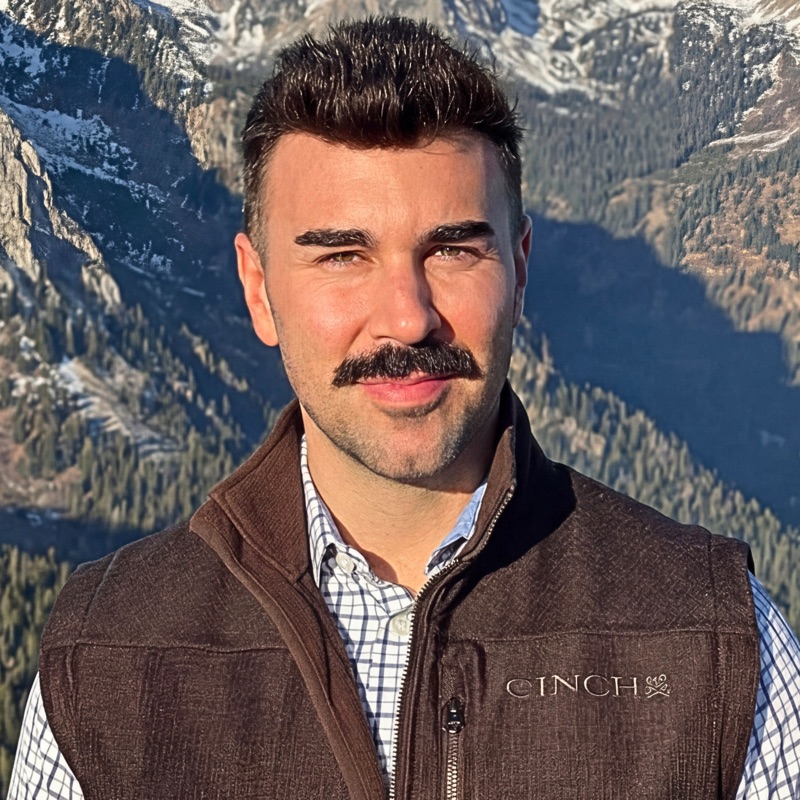
Questions first? Call Cameron directly: (801) 935-1014
Securities offered through Arkadios Capital, LLC, Member FINRA / Member SIPC.
Get in Touch
You don't have to be ready for anything. Let's just have a visit.
Free consult. No pressure. We'll tell you straight whether a DST fits.